Showing posts with label Newborn. Show all posts

Sunday, February 14, 2010

What To Feed an Infant


Before a baby is born, it is easy to feed a baby, They eat what you eat, and you expel their waste for them. After a baby is born, it can be harder to knw what to feed them. Most parents give bottles of formula at some point or another, few breastfeed the entire time. How can you know what road to take? Or when do you switch paths?

This is something you will need to research well before your baby is born to know the true benefits of a natural diet for your infant.

Newborn Essentials

As I am getting ready for my baby to arrive, I am faced with the dilemma of what to buy in prepration of the baby's birth. Here are a list of things I REALLY used with my last baby.

#1 Onsies or Kimono style teeshirts
#2 Recieving Blankets (my daughter hated these, my son loved them)
#3 Sling of some sort (not the ones you buy with all the little buckles, the straps are too narrow to be comfy)
#4 Diapers (I like cloth)
#5 Socks
#6 Nighties with open bottoms

That's pretty much it. Of course, you'll also want a carseat if your baby is going into the car. And maybe a few pairs of pants, if you have to strap the baby into anything. I always just used a purse or backpack to throw a few diapers into it.

Monday, December 14, 2009

Don't Cry It Out

A great blog, Primal Mommies has posted a link to an article that I think everyone should read. The article is ten reasons to not "cry it out". Here it is.

Sunday, September 6, 2009

Detox For Kiddos


So, there are tons of detoxes out there for the adults, but what about are kiddos? Our little people who are assaulted daily? They can have mercury contamination from vaccines, pesticides, cigarette poisons, formaldehyde, and countless other horrible things that we can't protect them from, and they're bodies are so small and helpless that they can't possibly stay away from or handle it all.

An easy (and safe) way to help their little bodies detox is to feed them pure, whole, organic foods. We can't all afford organics, but you can find the list of the worst and best things to buy conventionally, and make whole food meals for your child, they will slowly excrete the poisons. If you are breastfeeding or pregnant, you can also eat a whole, organic diet to minimize risk and exposure to your baby. Not only will they be getting the best possible diet, but their moods and health will increase dramatically. Plus, it's totally safe!

More to come! stay tuned!

Thursday, September 3, 2009

Unschooling


Today in the workplace we need thinkers. People who can see a problem for what it is and solve it, people who think outside of the box and don't need to be hand led the whole way. John Holt and John Taylor Gatto address how in the beginning of our public school system, the whole idea was to create little drones to work and never ask questions, we needed people to work in the factories and not complain about it. Now we are needing something else. We need to raise free thinking children, children who can solve a problem on their own and know how to teach themselves. We need adults who are competent individuals.

Public schools were not created to function this way, and they aren't going to start anytime soon. The only way we can create free-thinking kids is to take our children back! We need to teach ourselves to trust and remind our kids that they can learn. They can learn whatever they want!

Saturday, August 29, 2009

Cloth Diapering


We have been partially ECing now for a good while now, maybe 9 months, give or take a month or two. He does really well, and loves to go potty. We taught him to sign "potty" recently, and he lets us know quite often (sometimes he signs, but only wants his diaper off, lol). We do need to use diapers sometimes, though. We use some disposables, but I hate them, and so does Caelin.

The best option for us if we NEED to use something are cloth diapers. They are soft, multi-purpose and reusable. They also allow children to remain aware of being wet and soiled.

In my experience, cloth diapers are very good at keeping in mess, and very simple to use. There is a learning curve, but a small one, not really much more than disposables.

They are healthier for the earth, and healthier for our children.

Friday, August 28, 2009

Beginning Whole Foods


Eating whole foods is an obvious choice for adults, and you would think it would be an obvious choice for our children, too. After all, the ONE thing that ALL extremely healthy diets have in common is they are minimally processed and low in sugars.

So that all sounds amazing, but how do I feed my infant "whole foods", you may ask. Well, it all starts with conception, or even before. Feeding yourself healthy, natural (and in most cases raw) foods during this time gives your body and your baby the right building blocks to grow. It will help set your child up for healthy organ and brain developement, and it will help you gain the apropriate amount of weight. If you start before conception, a die like this will even help you to flush the toxins out of your body prior to you hosting a new person. If you are not vegetarian, or if you are, but only for health reasons, it is good to know that healthy animals who are grassfed and not injected with hormones are incredably healthy for you. Other than that, eat a strong variety of many whole foods, and eat as many raw or in their natural state as possible.

After your baby is born, you can easily continue feeding them an amazing whole foods diet....through your breastmilk. Espessially if your are eating a diet high in good, healthy food, your baby will benefit greatly. But even if you're not eating all that well, it's still the best way to get your newborn off to a great start.

Thursday, August 27, 2009

Caelin's Birth


Breastfeeding Caelin

Reading

Of all the gifts you can give to your children, I think reading is one of the most important. A child is going to grow and need to figure out what is true in the world. This is best accomplished through experiencing, but since we can't (and wouldn't want to) experience EVERYTHING, reading is an invauluable tool. Place a great emphasis on reading, and everything else will fall into place.

Wednesday, August 26, 2009

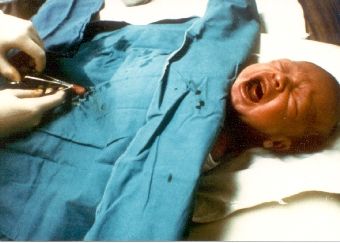
Why Not to Cut Your Baby's Penis.


People are faced with the circumcision decision everytime it is announced that they are having a little boy. They may be pressured by family, freinds, doctors, or what they percieve to be "normal". The father may be cut himself, and want his son to look like him. Why would you choose not to circumsize?

1: A cut penis is less sensitive.

2: A baby who is circumsized is more likely to have sexual issues growing up.

3: Children who are abused have a different brain chemistry, and circumstized males are likely to suffer some of the same effects.

4: An intact penis is easier to care for in infancy. No need to worry about cleaning the penis except for general wiping. The forskin protects the head of the glans from feces and irritation.

5: Most babies aren't medicated for pain during the procedure, and there's debate about whether the pain meds hurt as much going in and how effective they are.

Circumcision Video

Courteousy of YouTube:

Circumcision


I believe that circumcision is an electitive surgery that is almost totally useless. Here are a couple facts to learn about before your baby is born...


Precautions
Circumcision should not be performed on infants with certain deformities of the penis that may require a portion of the foreskin for repair. The most common
condition for surgery using the foreskin is hypospadias, a congenital deformity of the penis where the urinary tract opening is not at the tip of the glans. Also, infants with a large hydrocoele or hernia may suffer important complications through circumcision. Premature infants and infants with serious infections are also poor candidates to be circumcised, as are infants with hemophilia, other bleeding disorders, or whose mothers had taken anticoagulant drugs. In older boys or men, circumcision is a minor procedure. Therefore, it can be performed in virtually anyone without a serious illness or unusual deformity.


Description
The foreskin of the penis protects the sensitivity of the glans and shields it from irritation by urine, feces, and foreign materials. It also protects the urinary opening against infection and incidental injury.
In circumcision of infants, the foreskin is pulled tightly into a specially designed clamp, and the foreskin pulls away from the broadened tip of the penis. Pressure from the clamp stops bleeding from blood vessels that supplied the foreskin. In older boys or adults, an incision is made around the base of the foreskin, the foreskin is pulled back, and then it is cut away from the tip of the penis. Stitches are usually used to close the skin edges.


Preparation
Despite a long-standing belief that infants do not experience serious pain from circumcision, most authorities now believe that some form of local anesthesia is necessary. The physician injects local anesthesia at the base of the penis or under the skin around the penis (subcutaneous ring block). Both anesthetics block key nerves. EMLA cream, a topical formula of several anesthetics can also be used.


Aftercare
After circumcision, the wound should be washed daily. An antibiotic ointment or petroleum jelly may be applied to the site. If there is an incision, a wound dressing will be present and should be changed each time the diaper is changed. Sometimes a plastic ring is used instead of a bandage. The ring will usually fall off in five to eight days. The penis will heal in seven to 10 days.
Infants who undergo circumcision may be fussy for some hours afterward, so parents should be prepared for crying, feeding problems, and sleep problems. Generally these go away within a day. In older boys, the penis may be painful, but this will go away gradually. A topical anesthetic ointment or spray may be used to relieve this temporary discomfort. There may also be a "bruise" on the penis, which typically goes away with no particular attention.


Risks
Complications following newborn circumcision appear in one out of every 500 procedures. Most complications are minor. Bleeding occurs in half of the complications and is usually easy to control. Infections are rare and present with fever and signs of inflammation.